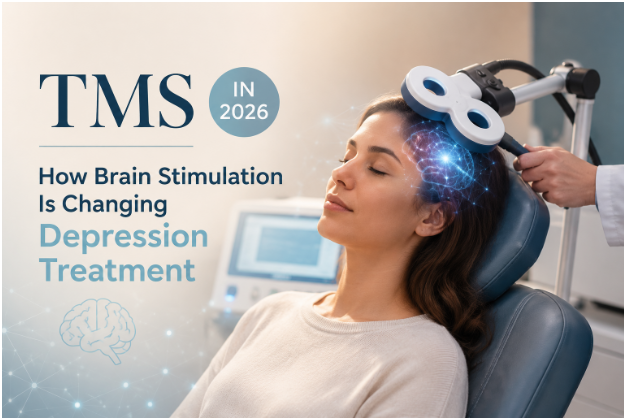
Accelerated TMS Effective for Treatment-Resistant Depression


Depression is one of the most pervasive mental health conditions worldwide, affecting millions of individuals. While traditional treatments such as medication and psychotherapy work for many, there is a significant group of patients who experience treatment-resistant depression (TRD). These individuals struggle to find relief even after multiple trials of antidepressants.

A groundbreaking study has recently explored the effectiveness of accelerated theta burst stimulation (aTBS), a condensed and high-intensity form of transcranial magnetic stimulation (TMS). The results indicate that this new approach could be a game-changer for those who have not responded to conventional treatments.

What is Transcranial Magnetic Stimulation (TMS)?

TMS is a non-invasive brain stimulation technique that has been used for years to treat depression. By using magnetic pulses to stimulate nerve cells in the brain, TMS can help regulate mood, reduce anxiety and alleviate symptoms of depression.

How Does TMS Work?

TMS works by delivering repetitive magnetic pulses to specific brain areas, particularly the left dorsolateral prefrontal cortex, which is responsible for mood regulation. This stimulation encourages neuronal activity in underactive regions of the brain, ultimately helping to reduce symptoms of depression.

Traditional vs. Accelerated TMS (aTBS)

Traditional TMS requires daily sessions over a period of four to six weeks, making it a slow and time-consuming process for patients. However, aTBS condenses this timeline, delivering short bursts of magnetic stimulation that is thought to be in sync with the brain's natural wave pattern. This means patients can see significant improvement in their symptoms within three weeks instead of several months.

Understanding Treatment-Resistant Depression

A third of individuals diagnosed with depression do not experience relief from traditional treatments, leading to treatment-resistant depression (TRD). This can be a frustrating and discouraging experience, but alternative treatment options like TMS and TBS provide new hope.

Why Some Patients Don’t Respond to Antidepressants

There are several reasons why some individuals do not respond to antidepressants:

  • Genetic Factors – Some people metabolize medications differently, making them less effective.
  • Neurobiological Differences – Certain brain structures and functions may contribute to depression resistance.
  • Chronic Stress and Trauma – Long-term stress can alter brain chemistry, making standard treatments ineffective.

Alternative Treatments for Depression

For those with TRD, there are several alternatives beyond medication, including:

  • Electroconvulsive Therapy (ECT) – A procedure using electrical pulses, requires anesthesia.
  • Ketamine Treatment– Shown to provide rapid relief for some patients.
  • Transcranial Magnetic Stimulation (TMS) – A non-invasive and effective outpatient option.

The Study on Accelerated Theta Burst Stimulation (aTBS)

A recent study published in JAMA Psychiatry examined the effectiveness of aTBS in treating treatment-resistant depression. The study aimed to determine whether aTBS could provide faster and more effective relief than traditional TMS.

Research Overview

The research focused on comparing aTBS with a sham procedure to evaluate its impact on depression symptoms. Participants underwent treatment in an outpatient setting, making it accessible and practical for real-world use.

Study Participants and Methodology

The research focused on comparing aTBS with a sham procedure to evaluate its impact on depression symptoms. Participants underwent treatment in an outpatient setting, making it accessible and practical for real-world use.

The study took place between July 2022 and June 2024 and included 89 outpatients with TRD. The participants were randomly assigned to either:


  • Active aTBS Group – Received actual TMS treatment.
  • Sham Procedure Group – Received a placebo treatment that mimicked TMS but did not deliver magnetic pulses.


All participants had a Hamilton Depression Rating Scale (HDRS) score above 16 and had failed to respond to at least one antidepressant trial.

Treatment Duration and Procedure

Patients in the active aTBS group underwent:

  • Three daily TMS sessions, each lasting six minutes and 18 seconds.
  • Two 30-minute breaks between sessions.
  • Total daily treatment time of 78 minutes.
  • 15 weekdays of treatment, totaling 45 sessions.

Results and Effectiveness

The study found that aTBS led to a significant reduction in depression symptoms:

  • Patients who received active aTBS experienced a 55% reduction in their depression scores.
  • 34% of the active treatment group achieved full remission (HDRS score ≤ 8), compared to only 16% in the sham group.
  • The treatment was well tolerated, with only mild side effects reported.

Advantages of aTBS Over Traditional TMS

Shorter Treatment Duration

One of the biggest benefits of aTBS is its efficiency. Traditional TMS requires six weeks of daily treatments, whereas aTBS condenses this into just three weeks.

No Need for Neuroimaging Equipment

Unlike some TMS protocols, aTBS does not require neuroimaging equipment to target the treatment area, making it more accessible for outpatient clinics.

High Success Rate in Remission

The remission rate for aTBS (34%) was more than double that of the sham group (16%), demonstrating that this condensed treatment is highly effective.

Potential Side Effects and Considerations

Common Side Effects

The study reported that aTBS was well tolerated, with only mild side effects, including:

  • Scalp discomfort or pain during treatment.
  • Mild headaches after sessions.
  • Temporary discomfort in the treated area.

Who is an Ideal Candidate for aTBS?

Individuals who may benefit most from aTBS include:

  • Patients diagnosed with treatment-resistant depression.
  • Those who have tried at least two antidepressants with no success.
  • Individuals seeking a non-invasive treatment alternative.

Future of TMS and aTBS in Mental Health Treatment

Expanding Accessibility to Patients

Given its shorter treatment time and high success rate, aTBS has the potential to become a leading treatment for TRD. More clinics worldwide are adopting this protocol, making it accessible to a larger population.

Ongoing Research and Potential Improvements

The study suggests further clinical trials are needed to optimize aTBS parameters and compare its effectiveness to traditional TMS. Future advancements may refine pulse frequencies, treatment durations, and individualized protocols.

Conclusion

The results of this study confirm that accelerated theta burst stimulation (aTBS) is a promising treatment for individuals with treatment-resistant depression. With its short treatment time, high remission rates, and minimal side effects, aTBS is paving the way for more accessible and effective depression treatments. As research in TMS and aTBS continues to evolve, the future of mental health treatment looks increasingly bright for those struggling with TRD.

SHARE pOST:

RECENT POST:
A therapist writing on a clipboard in an office setting; text reads,
March 9, 2026
A Rising Need for Mental Health Support Let’s face it—life can feel like a pressure cooker. Between careers, relationships, social media, politics, and a never-ending to-do list, it’s no wonder anxiety is on the rise. But here’s the good news: people are finally talking about it and getting help. And if you’ve been wondering where people are finding that help, Orange County is consistently a place in the U.S. to find expert anxiety treatment—and Irvine is right at the heart of it. The OC Lifestyle: Beautiful but Stressful? From the outside, Orange County looks like paradise. Beaches, palm trees, beautiful weather, high-end neighborhoods—it’s got that Instagram-worthy life. But underneath the sunshine, there’s pressure: high cost of living, career competition, and a fast-paced lifestyle that doesn’t leave much room to breathe. It’s a classic case of "looks good on the outside, chaos on the inside." As more people recognize how this affects them, they are turning to anxiety treatment in Orange County to get the best care. This is especially the case in Irvine where mental health services are widely available. Understanding Anxiety: More Than Just Worry Anxiety isn’t just feeling nervous before a meeting or overthinking before bed. It’s a full-body, mind-gripping experience. It can disrupt your sleep, your energy, your focus, and your relationships. It can show up as racing thoughts, chest tightness, irritability, or even physical illness. And the worst part? It often builds quietly over time until it feels like it’s controlling your life. That’s where effective, targeted treatment comes in—and Irvine Psychiatry and TMS is leading the charge. Why So Many Are Seeking Anxiety Treatment in Irvine So why Irvine? First, it’s home to some of the top therapists and psychiatrists in Southern California. Second, the area has become a hub for innovation in mental health—combining clinical research, technology, and a holistic approach. At Irvine Psychiatry and TMS , we’ve seen a surge in people looking for real, personalized help—not cookie-cutter advice or one-size-fits-all meds. Our patients want to understand and resolve their anxiety, not just mask it. Access to Top Therapists and Psychiatrists in Orange County Therapist availability can be a problem in many places—but not in Orange County. Irvine, in particular, has built a strong reputation for licensed professionals who specialize in anxiety treatment. Whether you're looking for medication and talk therapy or more advanced psychiatric care, there's no shortage of options here. A Closer Look at Irvine Psychiatry At Irvine Psychiatry and TMS , we combine compassion with science. We believe that treating anxiety is both an art and a science. Our approach is grounded in understanding your unique story, not just checking off symptoms. We offer a range of treatments—from therapy to medication management to interventional treatments—to meet you exactly where you’re at. Whether you're just starting to feel the pressure or you've been dealing with anxiety for years, our team is here to walk you through it, step by step. Cutting-Edge Techniques Being Used One of the biggest reasons Orange County is leading the way in anxiety treatment? Innovation. Clinics like ours are using new and effective techniques that go beyond the basics. Cognitive Behavioral Therapy (CBT) CBT is one of the most effective methods for treating anxiety—and our team integrates this into every session. This will help you recognize negative thought patterns, challenge them, and create healthier mental habits. It’s like rewiring your brain to respond to stress in a new way. And the best part? It works. Medication Management For some, therapy alone isn’t enough—and that’s okay. At Irvine Psychiatry and TMS, we take a careful, personalized approach to medication. We don’t overprescribe, and we always walk our patients through options, side effects, and long-term plans. Think of medication as a support beam—not the whole structure. Mindfulness-Based Stress Reduction (MBSR) Mindfulness isn’t just trendy—it’s clinically proven to help reduce anxiety. We incorporate breathing exercises, guided meditation, and body awareness practices to help clients reconnect with the present moment. It’s about learning how to pause the chaos and come back to center. Teletherapy: Convenience Meets Care In a post-pandemic world, telehealth is no longer optional—it’s essential. We’ve embraced it fully at Irvine Psychiatry. Although we prefer to see you in person, we understand that it’s sometimes nice to skip the Orange County freeways. For those days that you don’t want to be on the road, you can access quality anxiety treatment in Irvine, and the surrounding areas, from the comfort of your home. Whether you’re a student, a busy professional, or someone who just prefers a low-pressure setting, teletherapy brings the care to you. Why People Are Moving to OC for Mental Health Help Believe it or not, people come from all over California to Orange County for the impressive mental health resources. It’s that good. Between the sunny weather, the lifestyle, and the access to top-tier care, it’s a natural environment for healing. It’s not just about the treatment—it’s about the ecosystem of support. How to Know If You Need Anxiety Treatment Still wondering if it’s “bad enough” to get help? Here’s a reality check: If anxiety is interfering with your day-to-day life—sleep, work, relationships, energy—it’s time. You don’t need to wait until you hit rock bottom to get help. You just need to decide you’re ready for change. Making the First Move Toward Therapy The first step is always the hardest. But once you make the call, send the email, or fill out that form—it gets easier. At Irvine Psychiatry and TMS, we will help with every step. No judgment, no pressure. Just people who care and want to help. What to Expect from Treatment with our practice in Irvine When you walk into your first appointment (or log into your first telehealth session), here’s what you can expect: compassion, structure, and a game plan. You’ll talk. You’ll feel heard. You’ll start to understand your anxiety instead of fearing it. And most importantly, you’ll start learning how to manage it. Irvine Psychiatry’s Holistic Approach We don’t treat symptoms—we treat people. That means looking at your life, habits, environment, and relationships—not just your anxiety. From nutrition to sleep to social support, we believe every piece matters. And we’ll help you put those pieces back together.  Conclusion Orange County is a destination for healing—and anxiety treatment in Irvine is leading the way. Whether you’re dealing with everyday stress or crippling panic, know this: you don’t have to face it alone. At Irvine Psychiatry and TMS , we’re here to listen, to support, and to guide you toward a better, calmer version of yourself. Ready to take the next step? Let’s talk.
May 16, 2025
Explore the key differences between TMS and Spravato for treatment-resistant depression. Learn how each works, their benefits, side effects, and which may be right for you. Discover expert care at Irvine Psychiatry and TMS.
A female doctor with a stethoscope around her neck is standing in front of a TMS chair.
By Hugh Creighton April 28, 2025
TMS is a revolutionary, non-invasive treatment that uses magnetic pulses to stimulate specific areas of the brain associated with mood regulation. It directly targets the prefrontal cortex, which studies has shown is often underactive in individuals with depression. By reactivating these neural pathways, TMS helps restore balance and improve mood.