Breaking the Loop: How Advanced TMS Therapy is Transforming OCD Treatment in Irvine


For those living with Obsessive-Compulsive Disorder (OCD), life can feel like being trapped in that repetitive loop. Whether it is the intrusive thoughts that won’t stay quiet or the physical compulsions that feel impossible to ignore, OCD is more than just a personality trait—it is a biological condition that impacts the brain’s circuitry.


In a high-pressure environment like Orange County, the need for control can make OCD symptoms even more taxing. While many patients in Irvine have tried traditional psychotherapy or Cognitive Behavioral Therapy (CBT) or high-dose SSRIs, nearly 40% of people with OCD do not find full relief from these first-line treatments.


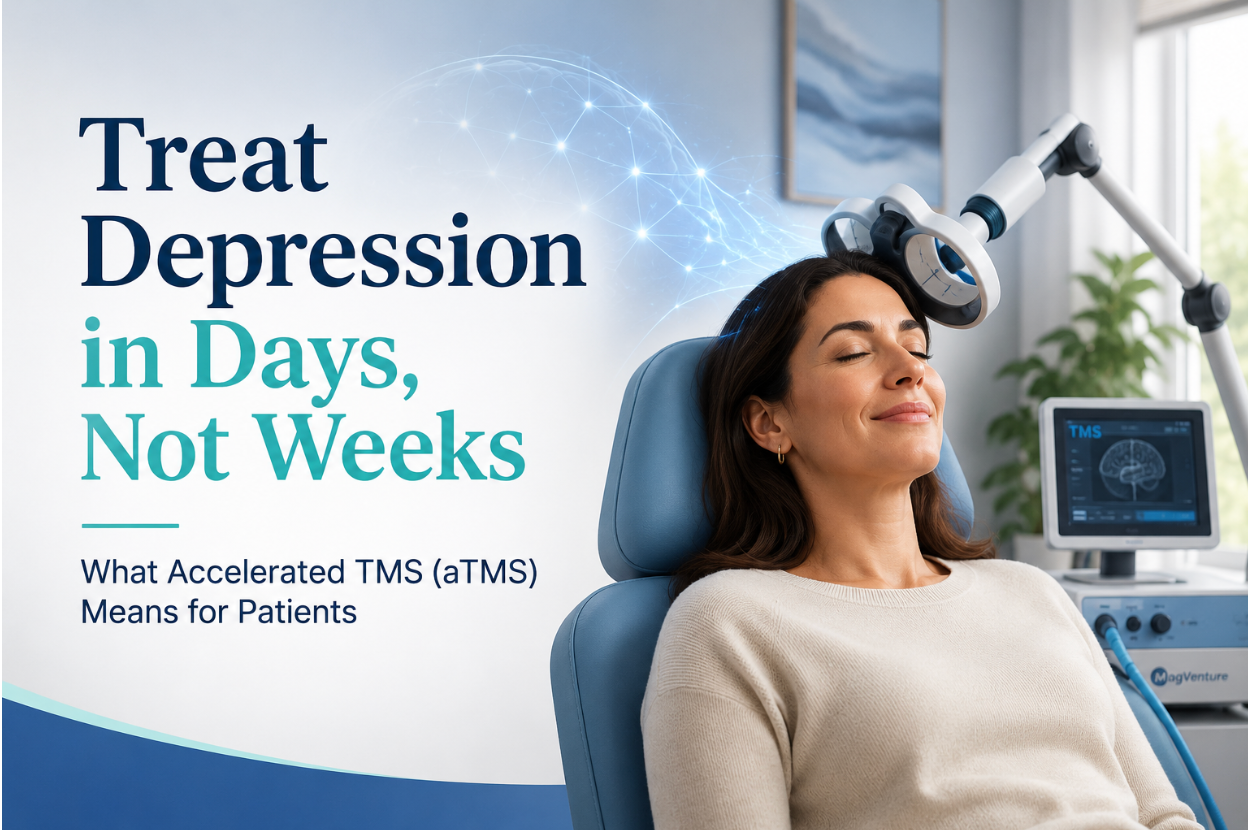
At Irvine Psychiatry and TMS, we are bridging that gap with Transcranial Magnetic Stimulation (TMS)—a non-invasive, FDA-approved technology that targets the specific pathways in the brain that are overactive in OCD.


The Science of the "Stuck" Brain Cycle

To understand why OCD is difficult to treat, we have to look at the brain's "cortico-striato-thalamo-cortical" (CSTC) circuit. In a healthy brain, this circuit helps you transition from a thought to an action and then "click" into a feeling of completion.

In the brain of someone with OCD, this circuit becomes hyperactive. It gets "stuck" in this repetitive loop, causing the brain to send continuous error signals (obsessions) that lead to repetitive behaviors (compulsions) in an attempt to find relief. Traditional talk therapy works on the "software" of the brain, but for many, the "hardware" itself—the physical neural pathway—needs a reset.


How TMS Targets OCD Differently Than Depression

Many people have heard of TMS as a treatment for depression, but the protocol for OCD is distinct. While depression treatment usually targets the prefrontal cortex to "wake up" or stimulate underactive circuits, OCD treatment often targets the supplementary motor area (SMA) and the anterior cingulate cortex (ACC). The pulse rate is also usually different. Instead of fast paced activating pulses, OCD treatment involves slow and consistent pulses.

By using focused magnetic pulses, TMS helps to "calm" the overactive circuits responsible for intrusive thoughts. This has been shown to help the brain "unstick" itself, making it easier for patients to engage in therapy and resist compulsions.


The Benefits of a Non-Medication Approach

One of the biggest hurdles in treating OCD is the side effects of medications. To treat OCD effectively, psychiatrists often have to prescribe SSRIs at much higher doses than what is used for depression. This can lead to more side effects, including:

  • Weight gain and metabolic changes.
  • Physical fatigue or "emotional blunting."
  • Sexual dysfunction.

TMS offers a powerful alternative. Because it is a localized treatment using magnetic fields, it does not enter the bloodstream and carries none of these systemic side effects. You can complete a 20-minute session at our Irvine office and drive right back to work or pick up your kids, with no "brain fog" or downtime.


What to Expect During OCD Treatment at Irvine Psychiatry and TMS

Choosing a new medical treatment can be intimidating, which is why we prioritize a transparent, supportive environment.  We work with you to review if TMS is the best next treatment option. We will make sure you’re comfortable with the steps involved. 

  1. The Clinical Mapping: Your first session involves "brain mapping," where we identify the precise location and intensity needed for your specific brain structure.
  2. The Treatment Pulse: During the session, you will feel a firm but painless tapping sensation. Most patients spend this time meditating or chatting with our technicians.
  3. The Timeline: For OCD, the FDA-cleared protocol typically involves sessions five days a week for about six weeks. Many patients begin to notice a "quieting" of their intrusive thoughts by week three or four.


Integration: TMS and Exposure Response Prevention (ERP)

At Irvine Psychiatry, we don’t view TMS as a replacement for therapy, but as a powerful "accelerant." When the physical intensity of an obsession is lowered by TMS, patients often find that their Exposure and Response Prevention (ERP) therapy becomes significantly more effective. You are no longer fighting your own brain chemistry; you are working with it.


Take Control of Your OCD at our practice in Orange County

If you feel like you’ve exhausted the standard options for OCD and you are not seeing improvement, it’s time to look at the frontier of interventional psychiatry. Our Irvine clinic is equipped with the latest TMS technology, and our team is dedicated to helping you find a path out of the loop.

Don't let OCD dictate your schedule, your relationships, or your peace of mind any longer.

Contact Irvine Psychiatry and TMS today to see if you are a candidate for TMS therapy.

SHARE pOST:

RECENT POST:

A therapist writing on a clipboard in an office setting; text reads,
March 9, 2026
A Rising Need for Mental Health Support Let’s face it—life can feel like a pressure cooker. Between careers, relationships, social media, politics, and a never-ending to-do list, it’s no wonder anxiety is on the rise. But here’s the good news: people are finally talking about it and getting help. And if you’ve been wondering where people are finding that help, Orange County is consistently a place in the U.S. to find expert anxiety treatment—and Irvine is right at the heart of it. The OC Lifestyle: Beautiful but Stressful? From the outside, Orange County looks like paradise. Beaches, palm trees, beautiful weather, high-end neighborhoods—it’s got that Instagram-worthy life. But underneath the sunshine, there’s pressure: high cost of living, career competition, and a fast-paced lifestyle that doesn’t leave much room to breathe. It’s a classic case of "looks good on the outside, chaos on the inside." As more people recognize how this affects them, they are turning to anxiety treatment in Orange County to get the best care. This is especially the case in Irvine where mental health services are widely available. Understanding Anxiety: More Than Just Worry Anxiety isn’t just feeling nervous before a meeting or overthinking before bed. It’s a full-body, mind-gripping experience. It can disrupt your sleep, your energy, your focus, and your relationships. It can show up as racing thoughts, chest tightness, irritability, or even physical illness. And the worst part? It often builds quietly over time until it feels like it’s controlling your life. That’s where effective, targeted treatment comes in—and Irvine Psychiatry and TMS is leading the charge. Why So Many Are Seeking Anxiety Treatment in Irvine So why Irvine? First, it’s home to some of the top therapists and psychiatrists in Southern California. Second, the area has become a hub for innovation in mental health—combining clinical research, technology, and a holistic approach. At Irvine Psychiatry and TMS , we’ve seen a surge in people looking for real, personalized help—not cookie-cutter advice or one-size-fits-all meds. Our patients want to understand and resolve their anxiety, not just mask it. Access to Top Therapists and Psychiatrists in Orange County Therapist availability can be a problem in many places—but not in Orange County. Irvine, in particular, has built a strong reputation for licensed professionals who specialize in anxiety treatment. Whether you're looking for medication and talk therapy or more advanced psychiatric care, there's no shortage of options here. A Closer Look at Irvine Psychiatry At Irvine Psychiatry and TMS , we combine compassion with science. We believe that treating anxiety is both an art and a science. Our approach is grounded in understanding your unique story, not just checking off symptoms. We offer a range of treatments—from therapy to medication management to interventional treatments—to meet you exactly where you’re at. Whether you're just starting to feel the pressure or you've been dealing with anxiety for years, our team is here to walk you through it, step by step. Cutting-Edge Techniques Being Used One of the biggest reasons Orange County is leading the way in anxiety treatment? Innovation. Clinics like ours are using new and effective techniques that go beyond the basics. Cognitive Behavioral Therapy (CBT) CBT is one of the most effective methods for treating anxiety—and our team integrates this into every session. This will help you recognize negative thought patterns, challenge them, and create healthier mental habits. It’s like rewiring your brain to respond to stress in a new way. And the best part? It works. Medication Management For some, therapy alone isn’t enough—and that’s okay. At Irvine Psychiatry and TMS, we take a careful, personalized approach to medication. We don’t overprescribe, and we always walk our patients through options, side effects, and long-term plans. Think of medication as a support beam—not the whole structure. Mindfulness-Based Stress Reduction (MBSR) Mindfulness isn’t just trendy—it’s clinically proven to help reduce anxiety. We incorporate breathing exercises, guided meditation, and body awareness practices to help clients reconnect with the present moment. It’s about learning how to pause the chaos and come back to center. Teletherapy: Convenience Meets Care In a post-pandemic world, telehealth is no longer optional—it’s essential. We’ve embraced it fully at Irvine Psychiatry. Although we prefer to see you in person, we understand that it’s sometimes nice to skip the Orange County freeways. For those days that you don’t want to be on the road, you can access quality anxiety treatment in Irvine, and the surrounding areas, from the comfort of your home. Whether you’re a student, a busy professional, or someone who just prefers a low-pressure setting, teletherapy brings the care to you. Why People Are Moving to OC for Mental Health Help Believe it or not, people come from all over California to Orange County for the impressive mental health resources. It’s that good. Between the sunny weather, the lifestyle, and the access to top-tier care, it’s a natural environment for healing. It’s not just about the treatment—it’s about the ecosystem of support. How to Know If You Need Anxiety Treatment Still wondering if it’s “bad enough” to get help? Here’s a reality check: If anxiety is interfering with your day-to-day life—sleep, work, relationships, energy—it’s time. You don’t need to wait until you hit rock bottom to get help. You just need to decide you’re ready for change. Making the First Move Toward Therapy The first step is always the hardest. But once you make the call, send the email, or fill out that form—it gets easier. At Irvine Psychiatry and TMS, we will help with every step. No judgment, no pressure. Just people who care and want to help. What to Expect from Treatment with our practice in Irvine When you walk into your first appointment (or log into your first telehealth session), here’s what you can expect: compassion, structure, and a game plan. You’ll talk. You’ll feel heard. You’ll start to understand your anxiety instead of fearing it. And most importantly, you’ll start learning how to manage it. Irvine Psychiatry’s Holistic Approach We don’t treat symptoms—we treat people. That means looking at your life, habits, environment, and relationships—not just your anxiety. From nutrition to sleep to social support, we believe every piece matters. And we’ll help you put those pieces back together.  Conclusion Orange County is a destination for healing—and anxiety treatment in Irvine is leading the way. Whether you’re dealing with everyday stress or crippling panic, know this: you don’t have to face it alone. At Irvine Psychiatry and TMS , we’re here to listen, to support, and to guide you toward a better, calmer version of yourself. Ready to take the next step? Let’s talk.
May 16, 2025
Explore the key differences between TMS and Spravato for treatment-resistant depression. Learn how each works, their benefits, side effects, and which may be right for you. Discover expert care at Irvine Psychiatry and TMS.
A female doctor with a stethoscope around her neck is standing in front of a TMS chair.
By Hugh Creighton April 28, 2025
TMS is a revolutionary, non-invasive treatment that uses magnetic pulses to stimulate specific areas of the brain associated with mood regulation. It directly targets the prefrontal cortex, which studies has shown is often underactive in individuals with depression. By reactivating these neural pathways, TMS helps restore balance and improve mood.