Depression treatment has changed a great deal in recent years, and 2026 is shaping up to be an especially important year for brain stimulation therapies. For many people living with Major Depressive Disorder, traditional treatment approaches like medication and therapy help, but they do not always bring full relief. That is where transcranial magnetic stimulation, or TMS, continues to stand out as a noninvasive, evidence-based option that is changing how we think about depression care.
At Irvine Psychiatry and TMS, TMS is one of the most important tools we offer for patients who need a different path forward. If you want to learn more about our treatment approach, you can explore our TMS Therapy page or visit the Irvine Psychiatry homepage to see our full range of services. Better yet, make an appointment and talk to Dr. Creighton about this treatment option.
What TMS is and how it works
TMS uses targeted magnetic pulses to stimulate areas of the brain involved in mood regulation, especially the prefrontal regions linked to motivation, focus, and emotional processing. It is noninvasive, does not require anesthesia, and is typically done in an outpatient setting. The treatment is FDA-cleared for depression and is also used in some cases of OCD and chronic pain.
The basic idea is simple: if certain brain circuits are underactive or dysregulated in depression, repeated stimulation may help restore healthier patterns of activity. That is why TMS has become an important option for people who have not responded adequately to antidepressants or who need a medication-sparing approach.
Why TMS is getting more attention in 2026
One of the biggest reasons TMS is drawing more attention in 2026 is that newer protocols are making treatment faster and more practical. Recent reporting shows that updated TMS technologies are shrinking treatment times from weeks to days, while also improving targeting precision. In other words, TMS is becoming easier to fit into real life without losing its clinical value.
This matters because many patients delay or stop treatment when the process feels too time-consuming. As TMS becomes more efficient, more people may be able to complete treatment and stay engaged with care. That shift is especially important for patients who are struggling with fatigue, low motivation, or severe depression symptoms that make long treatment plans difficult to sustain.
Standard TMS vs. accelerated TMS
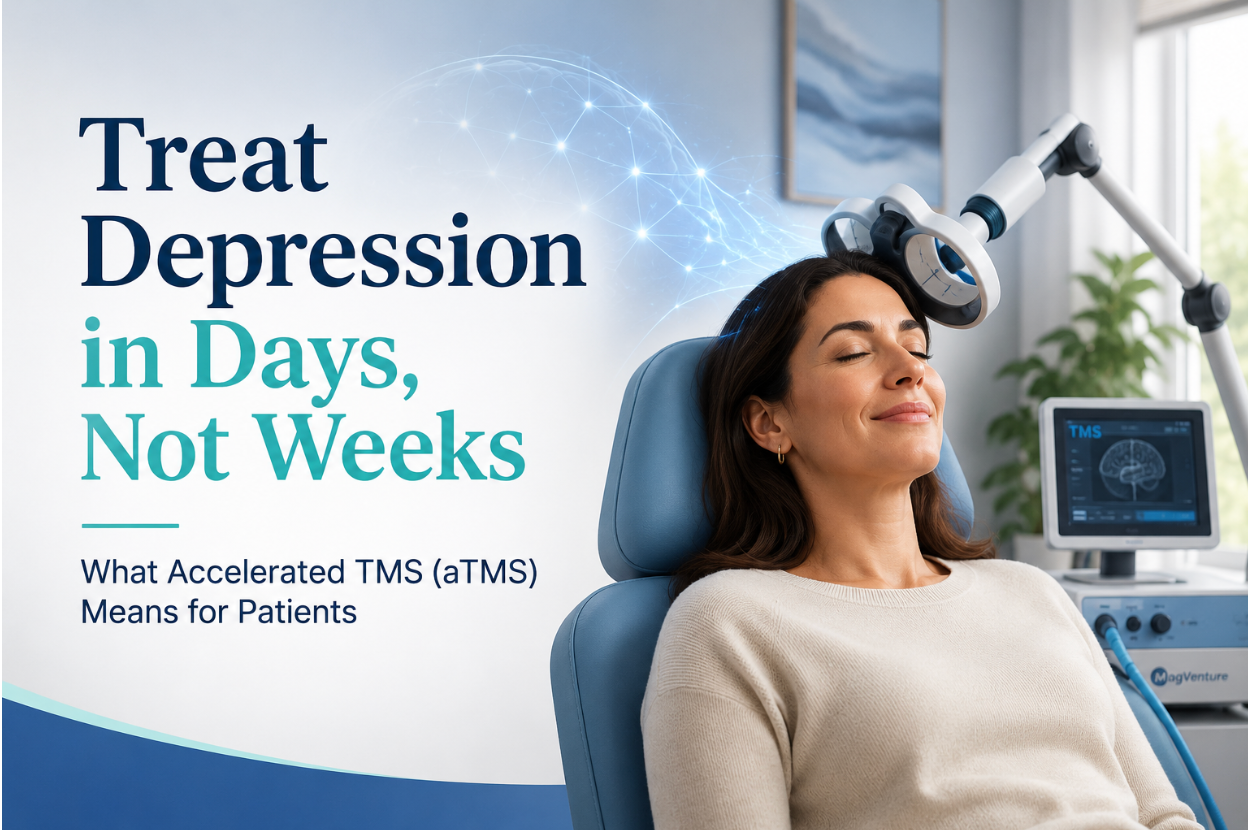
Traditional TMS is usually delivered once a day, five days a week, over several weeks. That model has helped many patients, but it can be hard to maintain if someone has work, caregiving responsibilities, transportation issues, or urgent symptoms. Accelerated TMS, or aTMS, changes that timeline by delivering multiple sessions per day over a much shorter period.
That shorter schedule is one of the most meaningful developments in the TMS space. Research shows accelerated protocols can reduce depressive symptoms rapidly, and one meta-analysis found that aTMS had no significant difference in antidepressant efficacy compared with standard TMS, while also suggesting possible long-term maintenance benefits. For patients who need faster relief, that is a major advantage.
If you are interested in whether aTMS may be right for you, our team can help determine candidacy through a psychiatric evaluation. You can start that process through the contact page on our website or by visiting our TMS services page.
Who may benefit most from TMS
TMS is especially helpful for people with moderate to severe depression who have not gotten enough benefit from medication or therapy alone. It may also be a strong option for patients who have side effects from antidepressants, prefer not to increase medication burden, or want a treatment that directly targets brain circuitry rather than relying only on systemic medication effects.
Patients with co-occurring anxiety, chronic pain, or obsessive symptoms may also benefit, depending on their individual clinical picture. Because depression often overlaps with other conditions, a full evaluation matters. That is why an experienced psychiatric team is important when deciding whether TMS should be part of the treatment plan.
What a typical course feels like
A TMS treatment visit is usually straightforward. The patient sits in a comfortable chair while the treatment coil is positioned over the targeted brain region, and magnetic pulses are delivered in short intervals. Many people describe the sensation as tapping or clicking on the scalp, which can feel odd at first but is generally well tolerated.
Common side effects are usually mild and temporary, such as scalp discomfort, headache, or fatigue. Serious side effects are rare when the treatment is properly screened and delivered by trained clinicians. As with any medical treatment, a full safety review is done before beginning care.
Why precision matters now
Another important trend in 2026 is the move toward more precise treatment targeting. Newer approaches use better imaging, improved coil placement, and more refined protocols to make stimulation more accurate and potentially more effective. This reflects a larger shift in psychiatry: treatment is becoming more personalized rather than one-size-fits-all.
That is good news for patients. Better targeting may mean full benefit from each and every session, a more efficient response, and a better fit between the treatment and the person receiving it. It also supports the idea that depression care should be tailored to each patient’s symptoms, history, and goals.
How TMS fits into a larger care plan
TMS works best as part of a broader treatment strategy, not as a stand-alone fix for every case. At Irvine Psychiatry and TMS, we often think about TMS alongside medication management, therapy, sleep support, stress reduction, and lifestyle changes. That kind of integrated care gives patients a better chance of maintaining gains after treatment ends.
For some people, TMS can create the momentum needed to re-engage with therapy, restore daily routines, and reduce the hopelessness that often makes depression feel stuck. For others, it can be the treatment that finally helps after several medications have not worked. Either way, it can be a turning point.
Why patients are asking about TMS now
In 2026, more patients are hearing about brain stimulation because the field is expanding quickly. Coverage discussions, newer protocols, and more public attention have made TMS easier to understand and harder to ignore. At the same time, people are more open than ever to non-drug options that fit into modern life.
That combination has made TMS one of the most talked-about options in depression care. Patients who once assumed there were no more options often discover that TMS offers a real path forward. For many, that alone changes the tone of treatment from frustration to hope.
When to consider an evaluation
You should consider a TMS evaluation if depression has lasted despite therapy, antidepressants, or both. It is also worth exploring if you are dealing with chronic low mood, major loss of function, or treatment side effects that make medication difficult to continue. A psychiatric consultation can help determine whether TMS, aTMS, or another approach is the best fit.
If you are ready to explore treatment, Irvine Psychiatry and TMS is a great place to start. Visit our TMS Therapy page for treatment information, or go to the Irvine Psychiatry homepage to connect with our team and schedule a consultation.
TMS in 2026 represents more than just another depression treatment. It reflects a broader shift toward faster, more precise, and more patient-centered psychiatric care. For people who have been waiting for the right option, that shift can be life-changing.
At Irvine Psychiatry and TMS, we are committed to helping patients understand their options and find the treatment path that fits their needs. TMS may not be the right answer for everyone, but for many people, it can be the treatment that finally moves depression in the right direction.
SHARE pOST:
RECENT POST: