U.S. mental health care in 2026 is being shaped by three big forces: policy changes, technology, and access pressure. For patients, that means more conversation around insurance coverage, telehealth, integrated care, and faster treatment options like TMS while systems continue to struggle with workforce shortages and uneven access.
For Irvine Psychiatry and TMS, this is a timely topic because it lets you connect current news to practical care options like psychiatric evaluation, medication management, psychotherapy coordination, and TMS.
Why 2026 feels different
Mental health care is not changing in just one area; it is changing across the whole system. Reports this year point to a mix of federal policy shifts, state-level differences, and increased pressure on behavioral health services, which is making access more uneven depending on where a person lives. At the same time, more patients are looking for care that is faster, more flexible, and more personalized.
That combination is pushing clinics to rethink how they deliver treatment. It also means patients are hearing more about options that used to feel specialized, such as brain stimulation, virtual care, and collaborative treatment models.
Policy and access shifts
One of the most important themes in 2026 is access. Policy reports and behavioral health trend analyses show ongoing concerns about funding, insurance parity, and the ability of patients to actually get timely care. Even when coverage exists on paper, administrative barriers still make treatment hard to start or continue.
The result is a growing need for clinics that can help patients navigate benefits, prior authorization, and treatment planning. For our practice at Irvine Psychiatry and TMS, that means continuing to do what we’ve always done, guide patients through options like TMS while also helping them understand how their coverage and clinical needs fit together.
Telehealth is still evolving
Telehealth remains a major part of mental health care in 2026, but it is still being sorted out. Reports point to both its strengths and its limits: it can improve access, especially for follow-up visits and people who live far from care, but it also depends on technology, privacy, and regulation. Some experts are also warning that telehealth needs stronger oversight to avoid misuse and preserve quality care.
For many patients, the lesson is simple: telehealth is useful, but it works best when paired with in-person services when needed. Without the option for in person visits, care can be limited. A hybrid model often gives the best balance of convenience and clinical support.
Integrated care is gaining ground
Another major shift in 2026 is the push toward integrated behavioral health. More systems are trying to bring mental health care into primary care and other medical settings, especially for patients with chronic illness, depression, and anxiety. This matters because we know that mental health symptoms regularly show up alongside pain, sleep problems, diabetes, heart disease, and other long-term conditions.
Integrated care reduces fragmentation. Instead of sending patients from one office to another without a clear plan, doctors can coordinate treatment more effectively. That approach can improve follow-through, reduce stress, and make care feel less overwhelming.
New treatment conversations
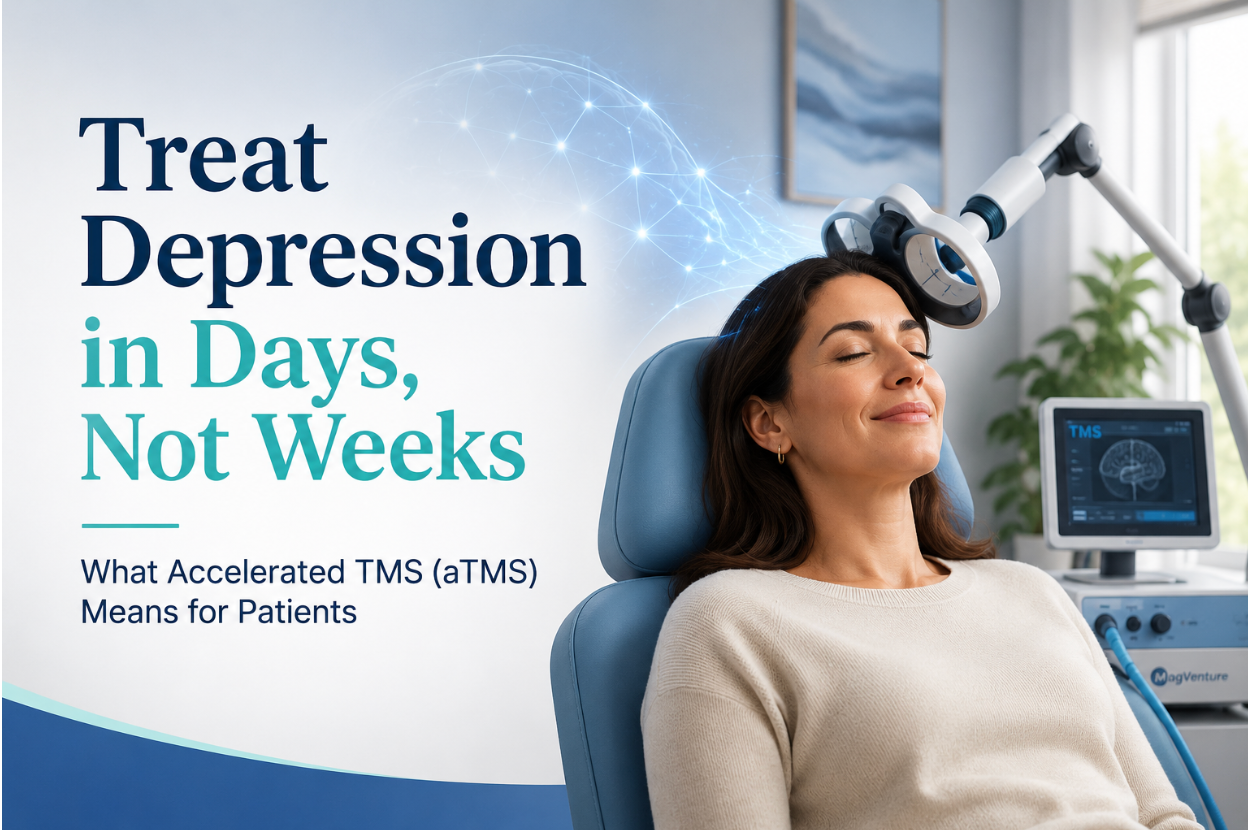
Patients are also hearing more about treatment innovation. In 2026, news about faster brain stimulation protocols, new neuromodulation technologies, and emerging psychiatric treatments has made mental health care feel more dynamic. TMS in particular is getting more attention because newer protocols can shorten treatment time and improve precision.
This is important for patients with depression who have not improved with medication alone. It also opens the door for a more hopeful conversation: mental health care is no longer limited to just one medication change after another.
Why TMS matters in this landscape
TMS fits naturally into the 2026 mental health conversation because it addresses several of the biggest pain points in care: time, tolerability, and access to another evidence-based option.
Standard TMS has already helped many patients with depression, and accelerated protocols are making it easier to complete treatment in a shorter period. That is especially relevant in a year when patients are looking for efficient care that still feels thorough and medically grounded.
At Irvine Psychiatry, TMS is part of a broader treatment strategy, not a standalone solution. It can be a strong option for patients who have treatment-resistant depression, medication side effects, or difficulty with long treatment timelines. You can connect this section to your TMS services page and your homepage for readers who want to learn more or schedule care.
What patients should take away
The biggest takeaway from 2026 is that mental health care is becoming more complex, but also more flexible. Patients are seeing more choices, more talk about integrated care, and more attention to faster, evidence-based treatments. At the same time, access challenges remain real, which makes supportive, well-organized practices even more important.
For patients, that means it is worth asking questions like:
- What treatment options fit my symptoms and schedule?
- Is my care team coordinating across therapy, medication, and medical issues?
- Could TMS or accelerated TMS be a good fit if depression has not improved?
How Irvine Psychiatry and TMS can help
Irvine Psychiatry and TMS is well positioned to help patients navigate this changing landscape. Whether someone needs help with depression, anxiety, medication management, TMS, or a treatment plan that considers chronic pain or eating concerns, the goal is the same: personalized, evidence-based care.
If you want to direct readers to action, you can link to:
- the Irvine Psychiatry homepage,
- the TMS Therapy page,
- and the blog page for more mental health education.
Mental health care in 2026 is being reshaped by policy, access, and innovation. The system has major challenges, but patients also have more tools, more awareness, and more treatment options than before.
For people struggling with depression or other mental health symptoms, that means there is reason to stay informed and reason to stay hopeful. We are here to help you along the journey.
SHARE pOST:
RECENT POST: