How TMS Therapy Works: A Step-by-Step Guide for First-Time Patients


Considering TMS therapy but not quite sure what to expect? Don’t worry—you’re not alone. Transcranial magnetic stimulation (TMS) might sound complex, but the process is surprisingly straightforward. In this guide, we’ll break down everything you need to know about TMS therapy, step by step, so you can feel confident heading into your first session.

What is TMS Therapy?

Understanding Transcranial Magnetic Stimulation

Transcranial magnetic stimulation (TMS) is a non-invasive treatment that uses magnetic fields to stimulate specific areas of the brain. It’s primarily used to treat depression, especially in patients who haven’t responded well to traditional treatments like medication or therapy.

How TMS Differs From Other Treatments

Unlike medication, which affects the entire body, TMS targets specific brain regions involved in mood regulation. There are no drugs involved, meaning fewer side effects compared to antidepressants. Plus, it’s performed in an outpatient setting, so there’s no need for hospital stays.

Who Can Benefit from TMS Therapy?

Conditions Treated by TMS

TMS therapy is widely known for treating depression, but it’s also being explored for conditions like anxiety, PTSD, OCD, and even chronic pain.

Ideal Candidates for TMS Therapy

If you’ve tried multiple antidepressants without success or experienced intolerable side effects, you might be a great candidate for TMS. It’s also an option for those looking for non-medication-based solutions.

How TMS Therapy Works: The Science Behind It

Magnetic Fields and Brain Stimulation

TMS therapy uses electromagnetic pulses to stimulate nerve cells in the brain. These pulses help improve communication between neurons, particularly in the prefrontal cortex—the part of the brain associated with mood regulation.

Targeting Specific Brain Regions

The magnetic coil used in TMS focuses on specific brain areas to reduce depression symptoms. This precise targeting is what makes TMS so effective compared to generalized treatments.

Preparing for Your First TMS Session

Initial Consultation and Evaluation

Before starting TMS therapy, you’ll meet with a specialist for an initial evaluation. They’ll review your medical history, discuss your symptoms, and determine if TMS is right for you.

What to Expect Before the First Session

Once you’re cleared for treatment, your provider will explain how the sessions work and what you should do to prepare. No special prep is needed—just wear comfortable clothes and avoid caffeine on the day of treatment.

The TMS Treatment Process: Step-by-Step

Step 1: Positioning and Preparation

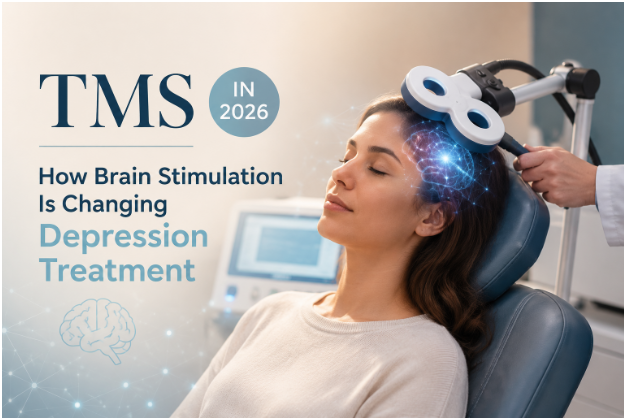
When you arrive, you’ll be seated in a comfortable chair. A technician will position the magnetic coil on your head to target the right brain area.

Step 2: Calibration and First Pulse

The first session involves calibration to find your motor threshold—the minimum intensity needed to stimulate your brain. This ensures that the treatment is personalized to your needs.

Step 3: The Actual Treatment

Once calibration is done, the real treatment begins. You’ll feel a tapping sensation on your scalp and hear clicking sounds from the machine. Each session lasts about 20–40 minutes.

Is TMS Therapy Painful? Debunking Myths

Common Misconceptions About TMS

Many people worry that TMS will be painful, but that’s far from the truth. While you may feel some discomfort at first, most patients describe it as a light tapping or tingling sensation.

What Patients Usually Feel During Treatment

Expect some scalp sensitivity during the first few sessions, but it typically fades as your body gets used to the stimulation.

Potential Side Effects and How to Manage Them

Mild Side Effects

The most common side effects are mild headaches and scalp discomfort. These can usually be managed with over-the-counter pain relievers.

Rare but Serious Risks

Serious side effects are extremely rare. Your provider will monitor you closely to ensure your safety throughout the treatment process.

How Long Does TMS Therapy Take to Work?

Short-Term vs. Long-Term Effects

Some patients notice improvements within a few weeks, while others may take longer. The effects are often cumulative, so it’s important to complete the full course of treatment.

Monitoring Progress

Regular check-ins with your provider help track your progress and adjust treatment if necessary.

The Benefits of TMS Therapy

Non-Invasive and Drug-Free

One of the biggest advantages of TMS is that it’s non-invasive and drug-free, making it an excellent option for those who can’t tolerate medication.

High Success Rate

Studies show that many patients experience significant symptom relief, especially those with treatment-resistant depression.

Life After TMS: What Comes Next?

Post-Treatment Care

After completing TMS therapy, it’s important to continue working on your mental health. This might involve therapy, lifestyle changes, or follow-up sessions as needed.

Maintaining Mental Health

Focus on self-care, regular exercise, and staying connected with your support network to maintain the benefits of TMS.

TMS Therapy in Orange County: Why Location Matters

Local Resources and Support

Orange County offers a wealth of mental health resources. Finding a local provider means easier access to follow-up care and support groups.

Choosing the Right TMS Provider

Look for experienced providers with a strong track record. Don’t be afraid to ask questions and make sure you feel comfortable with their approach.

SHARE pOST:

RECENT POST:
A therapist writing on a clipboard in an office setting; text reads,
March 9, 2026
A Rising Need for Mental Health Support Let’s face it—life can feel like a pressure cooker. Between careers, relationships, social media, politics, and a never-ending to-do list, it’s no wonder anxiety is on the rise. But here’s the good news: people are finally talking about it and getting help. And if you’ve been wondering where people are finding that help, Orange County is consistently a place in the U.S. to find expert anxiety treatment—and Irvine is right at the heart of it. The OC Lifestyle: Beautiful but Stressful? From the outside, Orange County looks like paradise. Beaches, palm trees, beautiful weather, high-end neighborhoods—it’s got that Instagram-worthy life. But underneath the sunshine, there’s pressure: high cost of living, career competition, and a fast-paced lifestyle that doesn’t leave much room to breathe. It’s a classic case of "looks good on the outside, chaos on the inside." As more people recognize how this affects them, they are turning to anxiety treatment in Orange County to get the best care. This is especially the case in Irvine where mental health services are widely available. Understanding Anxiety: More Than Just Worry Anxiety isn’t just feeling nervous before a meeting or overthinking before bed. It’s a full-body, mind-gripping experience. It can disrupt your sleep, your energy, your focus, and your relationships. It can show up as racing thoughts, chest tightness, irritability, or even physical illness. And the worst part? It often builds quietly over time until it feels like it’s controlling your life. That’s where effective, targeted treatment comes in—and Irvine Psychiatry and TMS is leading the charge. Why So Many Are Seeking Anxiety Treatment in Irvine So why Irvine? First, it’s home to some of the top therapists and psychiatrists in Southern California. Second, the area has become a hub for innovation in mental health—combining clinical research, technology, and a holistic approach. At Irvine Psychiatry and TMS , we’ve seen a surge in people looking for real, personalized help—not cookie-cutter advice or one-size-fits-all meds. Our patients want to understand and resolve their anxiety, not just mask it. Access to Top Therapists and Psychiatrists in Orange County Therapist availability can be a problem in many places—but not in Orange County. Irvine, in particular, has built a strong reputation for licensed professionals who specialize in anxiety treatment. Whether you're looking for medication and talk therapy or more advanced psychiatric care, there's no shortage of options here. A Closer Look at Irvine Psychiatry At Irvine Psychiatry and TMS , we combine compassion with science. We believe that treating anxiety is both an art and a science. Our approach is grounded in understanding your unique story, not just checking off symptoms. We offer a range of treatments—from therapy to medication management to interventional treatments—to meet you exactly where you’re at. Whether you're just starting to feel the pressure or you've been dealing with anxiety for years, our team is here to walk you through it, step by step. Cutting-Edge Techniques Being Used One of the biggest reasons Orange County is leading the way in anxiety treatment? Innovation. Clinics like ours are using new and effective techniques that go beyond the basics. Cognitive Behavioral Therapy (CBT) CBT is one of the most effective methods for treating anxiety—and our team integrates this into every session. This will help you recognize negative thought patterns, challenge them, and create healthier mental habits. It’s like rewiring your brain to respond to stress in a new way. And the best part? It works. Medication Management For some, therapy alone isn’t enough—and that’s okay. At Irvine Psychiatry and TMS, we take a careful, personalized approach to medication. We don’t overprescribe, and we always walk our patients through options, side effects, and long-term plans. Think of medication as a support beam—not the whole structure. Mindfulness-Based Stress Reduction (MBSR) Mindfulness isn’t just trendy—it’s clinically proven to help reduce anxiety. We incorporate breathing exercises, guided meditation, and body awareness practices to help clients reconnect with the present moment. It’s about learning how to pause the chaos and come back to center. Teletherapy: Convenience Meets Care In a post-pandemic world, telehealth is no longer optional—it’s essential. We’ve embraced it fully at Irvine Psychiatry. Although we prefer to see you in person, we understand that it’s sometimes nice to skip the Orange County freeways. For those days that you don’t want to be on the road, you can access quality anxiety treatment in Irvine, and the surrounding areas, from the comfort of your home. Whether you’re a student, a busy professional, or someone who just prefers a low-pressure setting, teletherapy brings the care to you. Why People Are Moving to OC for Mental Health Help Believe it or not, people come from all over California to Orange County for the impressive mental health resources. It’s that good. Between the sunny weather, the lifestyle, and the access to top-tier care, it’s a natural environment for healing. It’s not just about the treatment—it’s about the ecosystem of support. How to Know If You Need Anxiety Treatment Still wondering if it’s “bad enough” to get help? Here’s a reality check: If anxiety is interfering with your day-to-day life—sleep, work, relationships, energy—it’s time. You don’t need to wait until you hit rock bottom to get help. You just need to decide you’re ready for change. Making the First Move Toward Therapy The first step is always the hardest. But once you make the call, send the email, or fill out that form—it gets easier. At Irvine Psychiatry and TMS, we will help with every step. No judgment, no pressure. Just people who care and want to help. What to Expect from Treatment with our practice in Irvine When you walk into your first appointment (or log into your first telehealth session), here’s what you can expect: compassion, structure, and a game plan. You’ll talk. You’ll feel heard. You’ll start to understand your anxiety instead of fearing it. And most importantly, you’ll start learning how to manage it. Irvine Psychiatry’s Holistic Approach We don’t treat symptoms—we treat people. That means looking at your life, habits, environment, and relationships—not just your anxiety. From nutrition to sleep to social support, we believe every piece matters. And we’ll help you put those pieces back together.  Conclusion Orange County is a destination for healing—and anxiety treatment in Irvine is leading the way. Whether you’re dealing with everyday stress or crippling panic, know this: you don’t have to face it alone. At Irvine Psychiatry and TMS , we’re here to listen, to support, and to guide you toward a better, calmer version of yourself. Ready to take the next step? Let’s talk.
May 16, 2025
Explore the key differences between TMS and Spravato for treatment-resistant depression. Learn how each works, their benefits, side effects, and which may be right for you. Discover expert care at Irvine Psychiatry and TMS.
A female doctor with a stethoscope around her neck is standing in front of a TMS chair.
By Hugh Creighton April 28, 2025
TMS is a revolutionary, non-invasive treatment that uses magnetic pulses to stimulate specific areas of the brain associated with mood regulation. It directly targets the prefrontal cortex, which studies has shown is often underactive in individuals with depression. By reactivating these neural pathways, TMS helps restore balance and improve mood.